
 Share
ShareOutdoor Activities That Benefit Children
Why outdoor activities for children belong in the design brief
Outdoor activities for children are usually treated as a programming question for teachers. They are also a design question. The layout of a site, the mix of play types on it and the sightlines across it decide what actually happens in the space. This article is written for the people who plan, specify and run those spaces rather than for parents.
A play area that offers only one kind of movement produces one kind of development. A site that offers swinging, spinning, sliding, climbing, balancing and quiet imaginative space produces a much broader range. Understanding what each type of activity does biologically and socially is what turns a shopping list of equipment into a specification.
What physical activity outdoors actually develops
The developmental case is stronger and more specific than the usual claim that fresh air is good for children.
Gross motor development and bone loading
Running, climbing, hanging and jumping load the long bones and the large muscle groups in ways that classroom activity does not. Weight bearing and impact are what build bone density in childhood. Upper body hanging and pulling, which is largely absent from modern daily life, develops grip strength and shoulder stability that later support handwriting and tool use.
Vestibular and proprioceptive input
Swinging, spinning and sliding stimulate the vestibular system in the inner ear, which governs balance and spatial orientation. Climbing and balancing feed the proprioceptive system, the body’s sense of where its own limbs are. Children seek this input naturally, which is why they spin until dizzy and hang upside down. Equipment that provides controlled vestibular and proprioceptive stimulation supports coordination, posture and, according to occupational therapy practice, the ability to sit still and attend afterwards.
Sunlight, immune exposure and general health
Time outdoors gives sunlight exposure that supports vitamin D synthesis, and outdoor light exposure is associated in the research literature with slower progression of childhood myopia. Contact with varied outdoor environments also exposes children to a wider microbial environment than an indoor room does. Design implication: shade must be provided, but total shade defeats part of the purpose. Aim for a mix of shaded and open areas so that use is comfortable across the day.
Risk competence and hazard judgement
Children learn to judge risk by encountering it at a manageable scale. A climbing frame that challenges a competent seven year old teaches height judgement, grip commitment and retreat. Removing all challenge does not remove risk; it moves children to less suitable structures such as railings, roofs and walls. The design goal is graded challenge over hidden hazard: no head entrapment gaps, no protruding fixings, no fall from height onto inadequate surfacing, but plenty of things that feel difficult.
Social, cognitive and restorative benefits
The second half of the argument has nothing to do with muscles.
Negotiation, turn taking and shared rules
Equipment used by more than one child at once forces social work. A seesaw only functions if two children synchronise. A group roundabout requires agreement on speed and on who pushes. Queueing for a slide creates rules that children enforce themselves. Multi-user items are therefore the most socially productive spend on a site, and they should not be reduced to a single unit each.
Imaginative and open ended play
Play structures with ambiguous elements, such as decks, tunnels, counters, panels and towers, become shops, ships and houses. Highly literal themed equipment can suppress this by telling children what the object is. Leave interpretive room.
Attention restoration
Green outdoor environments allow directed attention to recover, which is why the period after outdoor break is usually more productive in classrooms. For schools this matters practically: the outdoor space is not lost teaching time, it is a condition of the teaching time either side of it.
Matching play types to equipment on your site
Use the table below to audit an existing site. If a row is empty, a category of development is not being served.
| Play type | Typical equipment | What it develops |
|---|---|---|
| Swinging | Flat and cradle seats, nest and basket swings, group swings | Vestibular input, rhythm, timing, social sharing on multi-user seats |
| Sliding | Straight, wide, tube and embankment slides | Speed and acceleration experience, courage building, queue based social rules |
| Spinning | Roundabouts, spinning cups, orbit discs | Vestibular stimulation, cooperative effort, tolerance of disorientation |
| Climbing | Rope nets, boulders, arch climbers, combination towers | Upper body strength, grip, route planning, risk judgement |
| Balancing | Beams, stepping pods, wobble bridges, log trails | Proprioception, core stability, sequencing and persistence |
| Imaginative and social | Playhouses, decks, panels, sand and water play, seating | Language, role play, negotiation, quiet recovery |
| Fitness and older users | Outdoor fitness stations for teenagers and adults | Strength, keeps older siblings and carers on site rather than displacing younger users |
Where the site serves teenagers or a wider community as well as young children, an adjoining fitness area often solves the age conflict; see our outdoor fitness equipment planning guide.
Laying out the site: zoning, sightlines and supervision
Layout carries as much developmental weight as the equipment itself, because it decides which children can reach which activity and how many staff are needed to run the space safely.
Zoning by age and intensity
Most complaints about a play area trace to zoning rather than to product quality. Toddlers wandering into the swing arc, or older children monopolising equipment sized for three year olds, are layout failures.
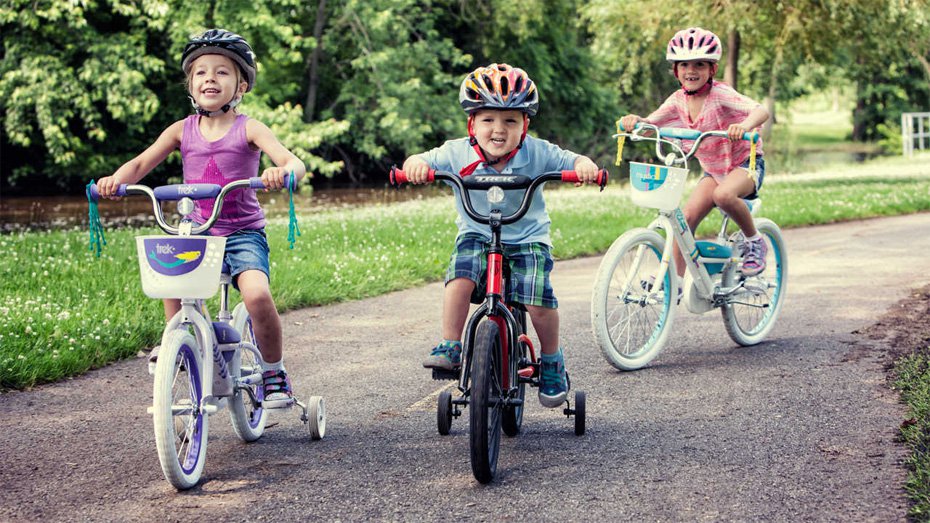
Apply four organising principles.
- Separate by age band. Provide a distinct area for approximately one to three years, another for four to eight, and challenge equipment for older children. Physical separation using planting, level change or a path is more effective than signage.
- Separate by intensity. Keep high energy items, such as running games, ball areas and swings, away from sand play, seating and imaginative areas. Quiet zones are used far less if a football rolls through them every minute.
- Protect the moving parts. Swings, roundabouts and rockers need a clear use zone and no circulation route crossing it. Locate them at the edge of the site rather than in the middle.
- Design the circulation first. Draw the paths children will take between entrance, equipment and toilets, then place equipment so those paths do not cross fall zones.
Inclusion sits on top of this. A wheelchair accessible route, ground level play, a supported swing seat and sensory elements let every child take part rather than watch, and it is far cheaper to design in than to retrofit. Our article on inclusive playground design principles covers the detail.
Supervision, sightlines and daily operation
Design decides how many staff a space needs. Enclosed tunnels, dense planting at adult eye level and equipment placed behind large structures create blind spots that force higher supervision ratios or restrict use.
Keep planting either below waist height or with a clear trunk above head height so that sightlines run through it. Position staff or carer seating where one person can see the whole space, usually near the entrance and at a slight level advantage. Keep a single controlled entry point on school and kindergarten sites. Where equipment must have enclosed elements, use perforated panels or short tunnel lengths.
Operationally, plan for enough capacity at peak. A break period concentrates the entire cohort into fifteen minutes, and a site sized for average use produces queueing, conflict and rough behaviour. Schools reviewing this should read our guidance on choosing outdoor playground equipment for schools.
Low cost outdoor activities for children without new equipment
Not every improvement is a purchase. Operators can widen the range of outdoor activities for children on an existing site immediately.
- Loose parts. Crates, planks, fabric, tubes, buckets and logs in a storage box beside the play area generate more varied play than any single fixed item. Keep them within the supervised zone and check them for damage weekly.
- Painted ground games. Hopscotch grids, number and letter squares, target circles and running tracks marked on hard surfacing cost very little and are used constantly.
- Movement trails. Chalk or paint a route around the site with instructions at each point: hop, balance, crawl, stretch. This spreads use away from the equipment cluster.
- Natural elements. Log rounds, boulders, planting beds, sand and a small growing area support exploration and quiet activity for a fraction of equipment cost.
- Rotation. Change the loose parts and the ground markings each term. Novelty restores engagement in a site children already know.
These measures also reduce wear on fixed equipment by spreading children across the whole site.
Frequently asked questions
How much outdoor time should a school or kindergarten plan for?
International guidance generally points to at least one hour of moderate to vigorous physical activity per day for school age children, with more free play for younger ones. In practice, plan for two or three outdoor sessions across the day and size the site so the whole cohort can be active at once rather than queueing.
Does a small site limit developmental value?
Not greatly, if the mix is right. A compact site with one climbing element, one swinging element, one balancing trail, a sand or imaginative area and good ground markings covers most developmental categories. Vertical layering and combination units recover a surprising amount of activity from a small footprint.
Should equipment be made easier to reduce injuries?
No. Remove hazards, not challenge. Eliminate entrapment gaps, sharp edges, protruding fixings and inadequate surfacing, then keep the physical difficulty that lets children build judgement. Under challenging equipment is abandoned quickly, and children then take genuine risks on structures never designed for climbing.
How do surfacing choices affect the range of activity?
Surfacing sets the critical fall height you can design to, which in turn sets how tall and challenging your climbing and swinging elements can be. It also affects running, ball games and wheelchair access. Decide the surfacing strategy alongside the equipment rather than after it.
Working with 067 Group
067 Group consults on, designs, supplies and installs children’s playground equipment, outdoor fitness equipment and safety surfacing for schools, kindergartens, residential developments, hotels and public parks. We survey the site, propose a layout that covers the full range of play types, and install to a specification you can operate safely afterwards. Completed schemes are shown on our projects page.
Vietnam office: No. 38 Ven Ho Ha Dinh, Ha Dinh ward, Thanh Xuan district, Hanoi. Phone +84 24 66 73 3777 or +84 24 66 73 9777. France office: 124 rue Reaumur, 75002 Paris, phone +33 975 18 9910.