
 Share
SharePlayground Shade Structures and Sun Protection
Why Playground Shade Structures Matter
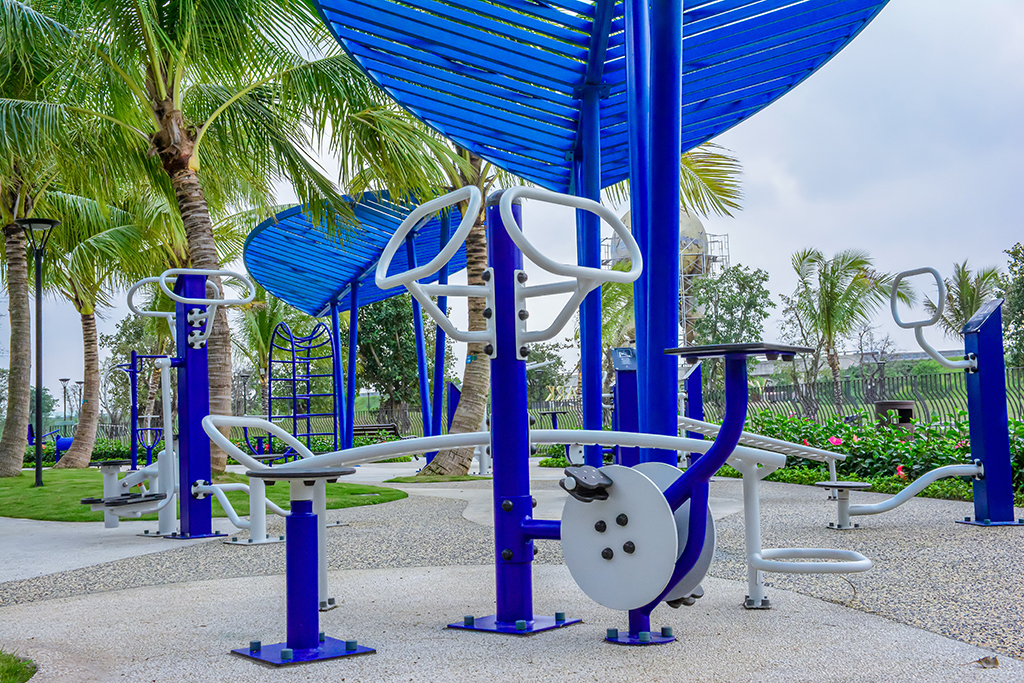
In Vietnam the midday sun is intense for much of the year. A metal slide, a steel deck or a set of monkey bars left in direct sunlight can become uncomfortable or even painful to touch, and dark rubber surfacing keeps radiating heat long after the sun has moved. Sun protection is not a luxury feature: it is part of making a play area safe and usable. Playground shade structures address this directly by lowering surface temperatures, filtering ultraviolet radiation and extending the window when children and supervising adults will actually stay.
Shade also supports the work of impact surfacing and equipment. A playground built to EN 1176 and TCVN 12730 requirements still needs a comfortable microclimate to be used as intended. When equipment is too hot to touch, children avoid it, and the investment underperforms. For projects in the tropics, and for rooftop or podium decks where reflected heat is stronger, shade planning should sit alongside drainage, surfacing and equipment selection from the first design review. The result is a longer, safer and more comfortable service life for the whole installation, which is what a school board or a building management committee ultimately measures.
Shade Options Compared
There is no single best shade type. The right choice depends on the site, the budget, the wind exposure and how permanent the solution needs to be. The table below summarises the main options a specifier will usually consider.
| Option | UV protection | Relative cost | Maintenance | Best for |
|---|---|---|---|---|
| Fabric sail or HDPE canopy | High, UPF rated fabric typically blocks 90 to 98 percent of UV | Lower | Periodic tensioning and cleaning | Retrofits, sandpits, budget projects |
| Steel-frame fixed roof | High, solid cover | Higher | Low, occasional inspection | Schools, pool decks, permanent sites |
| Tensioned membrane structure | High | Higher | Low to medium | Large spans, landmark projects |
| Natural tree shade | Partial and variable | Low initial, ongoing care | Ongoing pruning and leaf clearing | Landscaped parks, long-term plans |
| Pergola or timber louvre | Partial | Medium | Medium, timber care | Aesthetic, semi-shaded rest areas |
HDPE shade cloth is a common workhorse for playground shade structures because it balances cost, UV performance and airflow. Solid roofs block more heat but can trap warm air underneath if they are not ventilated, so the gap between the roof and the equipment matters as much as the cover itself.
Fabric vs Rigid Roofs: Trade-offs
Fabric sails and HDPE canopies are lighter, faster to install and easier to remove or reposition, which makes them popular for retrofitting existing playgrounds. The trade-off is that fabric needs periodic re-tensioning, and heavily tensioned sails transfer significant load to their anchor points. In a country with a coastal typhoon season, a loose or poorly anchored sail becomes a hazard rather than a shelter.
Rigid steel-frame roofs and membrane structures are heavier and cost more up front, but they last longer and resist wind better when engineered correctly. The decision usually comes down to permanence. A school or hotel courtyard that will not change for ten years is a good candidate for a fixed roof, while a temporary event lawn or a project with an uncertain master plan may be better served by fabric that can be taken down in the off-season. The cloth grade matters just as much as the frame: in a humid, high-UV climate, the fabric should be chosen the same way as the playground materials suited to a tropical climate, with resistance to fading, mould and salt air.
Wind, Foundations and Anchoring
Wind load is the dominant structural consideration for any overhead shade element, and it matters most in coastal and typhoon-prone areas. A shade structure acts like a sail, so the engineering must account for uplift as well as downward load. Foundations should be sized for the local wind exposure, and anchor points must be checked after any storm season.
Rooftop and podium installations add a second layer of care. Where a deck cannot be excavated for deep footings, the structure is often anchored to the slab or fixed to a ballasted frame, which changes how the load is distributed. This is one reason shade planning should involve the same structural discipline as the playground equipment itself, and why retrofitted shades on a podium deck need a proper assessment rather than an off-the-shelf kit. The same principle applies to coastal sites where salt air accelerates corrosion, so fixings and steelwork should be specified for a marine environment.
Orientation and Sun-Path Planning
Shade works best when it is positioned for the path of the sun, not just placed over the centre of the equipment. In the northern hemisphere, the afternoon sun comes from the west and sits low in the sky, so a canopy on the west and southwest side of a play structure is often more valuable than one directly overhead. Observing the site at different times of day, or checking a sun-path diagram for the location, reveals where the real hot spots are.
Orientation also affects where children play at different hours. A slide that faces the afternoon sun will heat up even under partial cover, while a structure shaded on the approach and the deck stays cooler throughout. Thinking about the sun path at the design stage costs nothing and often saves the price of a larger or more elaborate shade system later. It also changes how much cover is enough: a small, well-angled sail over the slide and the seating bench can keep a play area usable for several more hours a day, while an oversized overhead roof on the wrong side of the equipment adds cost without adding comfort.
Retrofit, Maintenance and Cleaning
If the playground already exists, a retrofit shade structure can usually be added without disturbing the equipment or the safety surfacing, provided the anchor points and the fall-zone geometry are respected. The key question is whether the shade posts will sit inside or outside the impact area, and whether they introduce a new hazard that EN 1177 and ASTM F1292 compliant surfacing cannot cover. This is also the point to check the full scope against the project planning logic in a playground project from brief to handover.
Once installed, shade needs a simple but regular routine:
- Tension fabric sails and HDPE canopies each season and after strong wind.
- Wash fabric with mild soap and water to stop mould and salt build-up.
- Inspect anchor bolts, welds and steelwork for rust, especially near the coast.
- Clear leaves and standing water from solid roofs and louvres.
- Check that shade posts have not shifted or cracked the surrounding surfacing.
This routine slots naturally into the schedule described in the playground equipment maintenance checklist, so shade and equipment are looked after together. For kindergartens, where nap and outdoor play hours overlap with the hottest part of the day, shade should be reviewed against the kindergarten playground equipment and TCVN requirements so the whole yard stays compliant and comfortable.
Frequently Asked Questions
How much UV does shade fabric actually block?
Good HDPE shade cloth and UPF-rated sail fabric typically block 90 to 98 percent of UV radiation depending on the weave and the colour. A solid roof blocks more but can trap heat, so a ventilated fabric or a roof with a gap is often the better comfort choice in a tropical climate.
Can I add a shade structure to an existing playground?
Usually yes. A retrofit is most straightforward when there is room for anchor points outside the fall zone, or when the structure can be fixed to a slab. The main risks are wind uplift, corrosion near the coast and new posts intruding on the safety surfacing, so a site assessment comes first.
Do shade structures affect playground safety standards?
Shade does not replace the requirements of EN 1176, EN 1177, TCVN 12730 or ASTM F1292 for the equipment and surfacing. The structure itself must be stable under wind load and must not create new entrapment or impact hazards, so it is treated as part of the same safety envelope as the equipment.
Is natural tree shade a good substitute for a built structure?
Mature trees provide pleasant, cooling shade and support biodiversity, but they grow slowly, shed leaves and give uneven cover that changes with the season. They work well as a long-term complement to a built structure rather than a complete replacement, especially where usable shade is needed immediately.
Plan Your Shade with 067 Group
Shade is easiest to get right when it is designed with the playground rather than added as an afterthought. 067 Group supplies and installs playground and outdoor fitness equipment alongside safety surfacing, and the team can assess sun exposure, wind load and anchoring as part of the same project. See how the process works at our process or browse completed projects, then contact the Hanoi office at No 38 Ven Ho Ha Dinh street, Ha Dinh ward, Thanh Xuan district, Hanoi, on +84 24 66 73 3777 or +84 24 66 73 9777 to discuss playground shade structures for your site.