
 Share
SharePlayground Materials for Tropical Climates: UV and Rain
Why the Climate Decides the Real Service Life
A playground that performs for a decade in northern Europe can look tired in three years in Hanoi or Da Nang. Choosing playground materials for tropical climates is a technical decision, not a catalogue preference. This article sets out what actually degrades here and what to write into your specification.
The buyer question is rarely “which product is best”. It is “which build-up survives 2,000 hours of hard sun, a monsoon season of standing water, and eighty percent relative humidity, while still passing an annual inspection”. Those are different questions, and the second one is answered by material grade, coating system, fixing metallurgy and drainage rather than by brand.
What Actually Degrades a Playground Outdoors Here
Ultraviolet on plastics and paint
UV breaks polymer chains. On unstabilised plastics the visible symptoms are chalking, colour fade, surface crazing and, eventually, brittleness at edges and around fixing holes. On painted steel it shows as gloss loss then chalking of the topcoat, which is cosmetic at first and structural later once the coating stops protecting the substrate. Reds, oranges and dark blues visibly shift first.
Monsoon rain and standing water
Intense rainfall is less damaging than water that has nowhere to go. Standing water saturates sub bases, softens bedding layers, wicks into timber end grain, sits in the closed sections of steel members and pools in equipment details that were drawn without drain holes. Almost every premature failure traced on site starts with water that stayed.
Humidity and condensation
High year round humidity keeps steel surfaces damp for long periods, including inside hollow posts where condensation forms and cannot evaporate. It also keeps timber moisture content high, which drives movement, checking and fungal attack.
Salt air at coastal sites
Airborne chloride accelerates corrosion dramatically. A resort in Phu Quoc, Ha Long or Nha Trang is a materially harsher environment than a site 30 km inland, and the specification should say so. Coastal projects justify heavier galvanising, duplex coating systems and stainless fixings that would be over specification elsewhere.
Surface temperature in direct sun
Dark surfaces in full tropical sun get hot enough to limit use in the middle of the day. This applies to black rubber, dark metal slides, dark HDPE decks and unshaded artificial grass. Light colours, shade structures, planting and orientation are part of material selection, not decoration.
Fungal growth and slip on shaded surfaces
Shaded, damp areas grow algae and mould on rubber, timber and grass. The safety issue is slip resistance, not appearance. North facing surfaces and areas under dense canopy need either a more open drainage detail or a shorter cleaning cycle.
Corrosion of fixings and dissimilar metals
Fixings fail before structures do. Plated steel bolts in a humid, chloride bearing environment corrode, seize and then cannot be removed for maintenance. Where a dissimilar metal is bolted to another, galvanic corrosion attacks the less noble metal at the joint. Isolating washers and consistent fixing metallurgy prevent an expensive problem.
Structure, Panels and Fixings: What to Specify
HDPE panels
UV stabilised high density polyethylene is the workhorse panel material for good reason. It does not rot, absorbs almost no water and holds colour well when the pigment and stabiliser package is specified for outdoor use. Ask for UV stabilised, colour through material rather than a surface printed or laminated panel, because scratches on colour through sheet do not expose a different colour underneath.
Rotomoulded plastic components
Rotomoulded slides, tunnels and play houses should be specified as UV stabilised polyethylene, with drain holes in every enclosed form. Check the design for water traps: a tunnel or seat that holds water is a mosquito habitat and a cleaning liability in the wet season.
Steel: hot dip galvanised and powder coated
For posts and structural members in the tropics, hot dip galvanising inside and out is the baseline, with powder coating over it as a duplex system where colour is required. Powder coat alone on bare steel is not adequate outdoors here; when the film is chipped, corrosion starts under the coating and spreads unseen. Specify sealed or drained hollow sections so water cannot collect internally.
Stainless fixings
Use stainless steel fixings throughout, and step up the grade for coastal sites. Keep fixing metallurgy consistent, use isolating washers where stainless meets galvanised or aluminium, and require that all fixings remain removable for inspection. A seized bolt turns a routine maintenance visit into a cutting job.
Timber and modified timber
Timber is viable here, but only with the right species and detailing. Dense tropical hardwoods and modified or thermally treated timber resist fungal attack far better than untreated softwood. Detail so end grain is not in ground contact: use galvanised or stainless post shoes and keep the timber above the finished surface, with rounded top edges so water sheds instead of sitting.
Surfacing: EPDM Wet Pour, Rubber Tiles and Artificial Grass
Surfacing takes the heaviest exposure of anything on site, since it is horizontal, unshaded and walked on. All three common systems can work in the tropics if the base is right.
Poured EPDM
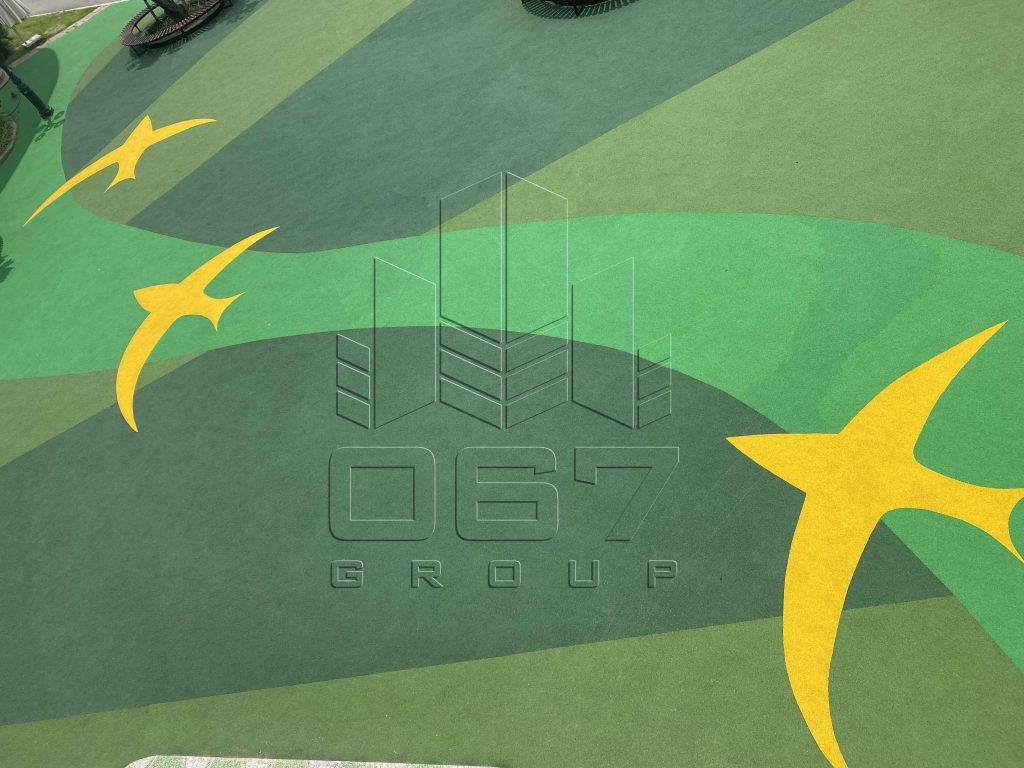
EPDM granules have good UV and colour stability, and a seamless surface leaves no joints for water to enter. The vulnerable points are the perimeter edge detail and the binder in the shock pad if water is allowed to stand. Specify a restrained edge and a permeable, positively drained build-up.
Rubber tiles
Tiles are easy to repair and easy to phase, which suits schools and staged developments. The joints are the weak point: heat driven movement and a soft base cause lipping and open joints. The trade-off between the two systems is set out in our comparison of EPDM against rubber tiles.
Artificial grass
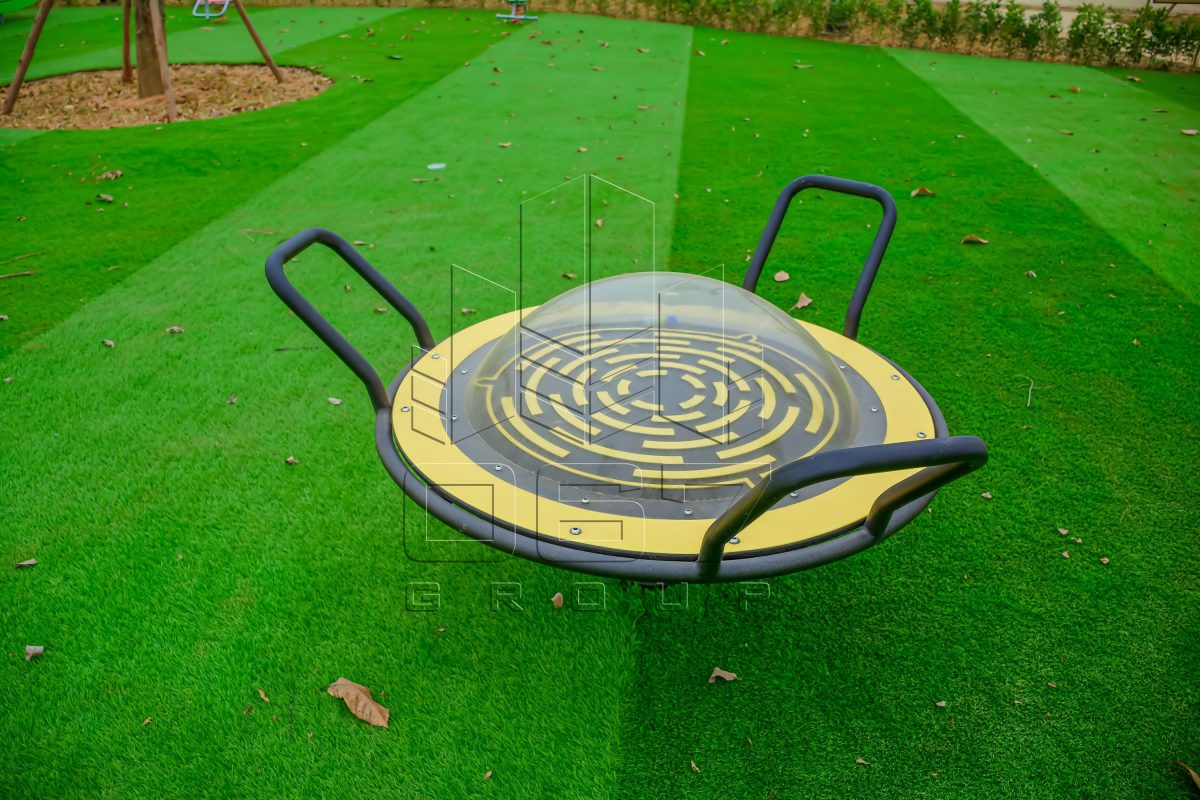
Artificial grass needs a UV stabilised yarn and a genuinely permeable backing and base. In heavy rain, a grass system laid on a sealed or poorly graded base becomes a shallow pond. Where it sits over a shock pad for fall protection, the tested build-up must be maintained, and infill migration after storms needs to be checked and topped up.
Playground Materials for Tropical Climates: Failure Modes and What to Specify
The table below summarises how each common material typically fails in this region and the specification wording that prevents it. Use it as a checklist when reviewing a supplier submittal.
| Material | Typical tropical failure mode | What to specify |
|---|---|---|
| HDPE panels | Colour fade, chalking, crazing at fixing holes | UV stabilised, colour through sheet; generous hole clearance; no surface print |
| Rotomoulded plastics | Fade, brittleness at thin sections, trapped water inside forms | UV stabilised polyethylene; drain holes in every enclosed form |
| Steel structure | Rust bleeding from cut edges and welds; internal corrosion of hollow sections | Hot dip galvanised inside and out, powder coat over galvanising, sealed or drained sections |
| Painted or plated fixings | Corrosion, seizing, heads shearing during maintenance | Stainless fixings, higher grade at coastal sites, isolating washers at dissimilar metals |
| Softwood timber | Fungal decay at ground line, checking, movement | Dense hardwood or modified timber; post shoes; no ground contact; shed water at top edges |
| Poured EPDM | Edge lifting, algae in shaded zones, binder failure under standing water | Restrained edge, permeable build-up, positive falls to a connected outlet |
| Rubber tiles | Joint lipping and opening, rocking over a soft base | Compacted permeable base to tolerance, edge restraint, spare tile stock held on site |
| Artificial grass | Water ponding, infill migration, yarn fade and flattening | UV stabilised yarn, permeable backing and base, drainage layer, infill top-up regime |
| Dark surfaces generally | Surface temperature limiting midday use | Lighter tones in open areas plus designed shade over seating and toddler zones |
Drainage, Sub Base and the Maintenance Interval
Two things separate a ten year installation from a three year one, and neither is on the equipment datasheet.
The base decides how long the surface lasts
A permeable sub base, compacted to tolerance, with positive falls to an outlet that actually connects to a drain, is worth more than an upgrade in surfacing product. Equipment foundations should be set relative to the finished surfacing level and installed before surfacing, so nobody has to cut into a tested build-up later.
Material choice changes the maintenance interval
This is the point most budgets miss. Specifying playground materials for tropical climates is not only a purchase decision; it sets how often somebody has to come back. Powder coat over bare steel needs touch-up rounds that duplex coated steel does not. Plated fixings need replacement that stainless does not. Shaded rubber needs a shorter cleaning cycle than sunlit rubber. Under EN 1176-7 the operator carries the inspection and maintenance duty regardless, so the honest comparison is installed cost plus the realistic upkeep the specification implies. Our playground equipment maintenance checklist gives the routine, operational and annual inspection tasks in order.
Ask for evidence, not adjectives
“Weather resistant” means nothing in a submittal. Ask for the material grade, the coating system and thickness, the fixing grade, the surfacing test report to EN 1177 or ASTM F1292 for the exact build-up, and conformity to EN 1176 or the TCVN 12730 series. The evidence to demand is listed in our guide to playground equipment safety standards.
Frequently Asked Questions
Which playground materials for tropical climates last longest?
There is no single winner. In practice, UV stabilised HDPE and rotomoulded polyethylene, hot dip galvanised steel with a powder coat over it, and stainless fixings form the most durable combination. Timber can match them if the species and detailing are right. Drainage quality then decides how much of that designed life you actually get.
Do I need stainless fixings on an inland site?
Stainless is still the sensible default inland because humidity alone keeps fixings damp and seized bolts block maintenance. Coastal sites, where airborne chloride is present, justify a higher stainless grade. Whichever grade you choose, keep it consistent and use isolating washers where stainless bolts into galvanised or aluminium components.
How do I stop rubber surfacing getting too hot?
Colour and shade do most of the work. Choose lighter tones for large open areas, and plan real shade over seating, toddler zones and any surface where children sit or lie. Trees, canopies and the equipment itself all help. Darker colours are best kept for smaller graphic areas rather than whole play zones.
Is artificial grass a good choice in the monsoon?
It can be, provided the yarn is UV stabilised and the backing, shock pad and sub base are genuinely permeable with drainage below. Laid over a sealed or badly graded base it holds water and grows algae. Where it provides fall protection, keep the tested build-up intact and check infill levels after heavy storms.
Talk to 067 Group About Your Site
067 Group provides consultancy, design, supply and installation of playground equipment, outdoor fitness equipment and rubber and EPDM safety surfacing, so the material specification, drainage and surfacing build-up are resolved together rather than in separate packages. Coastal, rooftop and heavily shaded sites each need a different answer. To discuss yours, contact our Hanoi office at No 38 Ven Ho Ha Dinh street, Ha Dinh ward, Thanh Xuan district, Hanoi, on +84 24 66 73 3777 or +84 24 66 73 9777. The product ranges available for these specifications are listed on our brands page.